



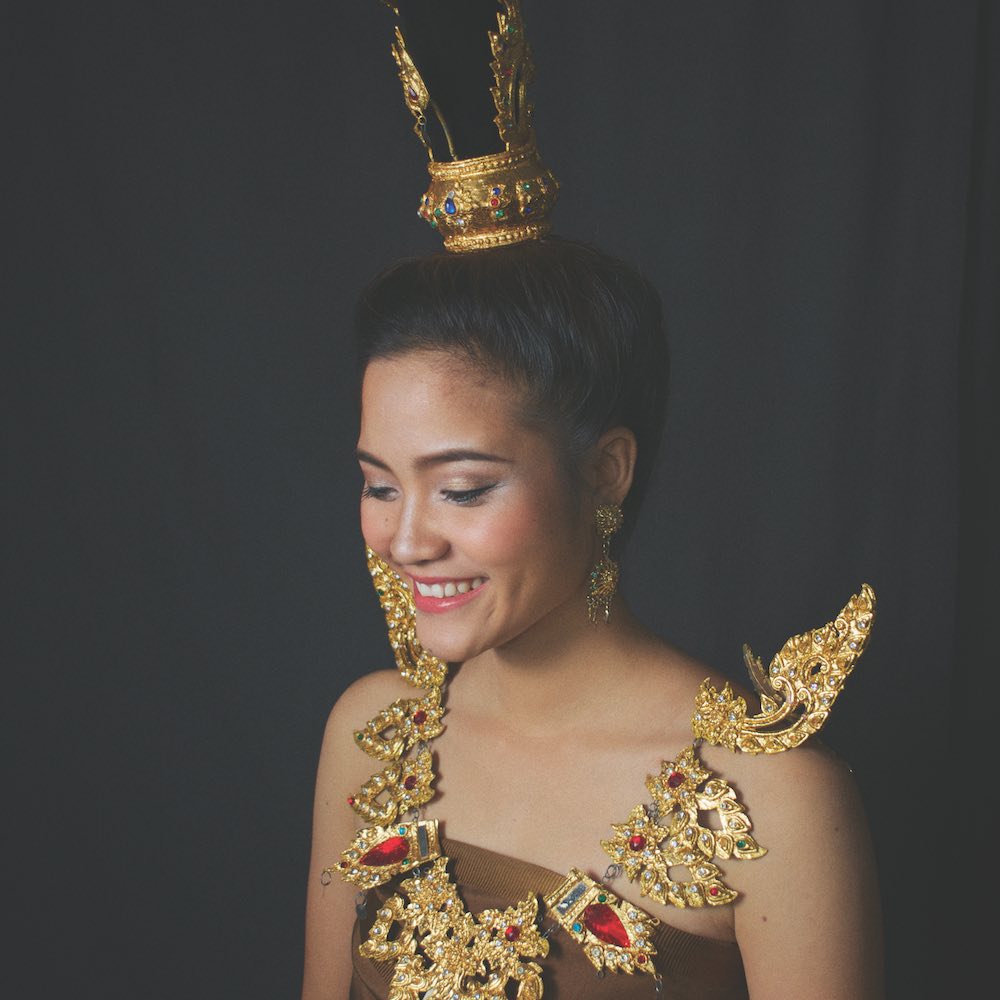
If I speak with the tongue of a national, but have not love, I am only a resounding gong or clanging cymbal.
If I wear the national dress and understand the culture and all forms of etiquette, and if I copy all the mannerisms so that I could pass for a national, but have not love, I am nothing.
If I give all I possess to the poor, and if I spend my energy without reserve, but have not love, I am nothing.
Love endures long hours of language study, and is kind to those who mock his accent, love does not envy those who stayed at home, love does not exalt his home culture, is not proud of national superiority.
Love does not boast about the way we do it back home, does not seek his own ways, is not easily provoked into telling about the beauty of his home country, does not think evil of this culture.
Love bears all criticism about his home culture, believes all good things about this new culture, confidently anticipates being at home in this place, endures all inconveniences.
Love never fails, but where there is cultural anthropology, it will fail, where there is linguistics, it will change.
For we know only part of the culture and we minister to only part of the culture.
But when Christ is reproduced in this culture, then our inadequacies will be insignificant.
When I was in Holland* I spoke as a Dutchie* I understood as a Dutchie* I thought as a Dutchie*, but when I left Holland*, I put away Dutch* things.
Now we adapt to this culture awkwardly, but He will live in it intimately, now I speak with a strange accent, but He will speak to the heart.
And now these three remain; cultural adaptation, language study and love, but the greatest of these is love.
* fill in your own nationality
Thai Culture
Greeting : "Sawat-dee"
The national form of greeting in Thailand is the "wai". It is done by placing the hands palm to palm and raising them to the face. About the level with the mouth or chin is normal, with a slight bow of the head. Quickly discipline yourself to greet with the "wai", except to younger children, where a smile or nod is sufficient acknowledgement. When greeting, the younger or socially 'inferior' greets the elder or socially 'superior' first.
Head
Thais consider the head as the most honorable part of the body. Therefore it is a great insult to touch a person's head, reach over it or point at a person's face. If you accidentally forget and do so, politely beg his or her pardon. If necessary to reach for something above someone's head, say "excuse me" first.
 Foot
Foot
The foot is considered to be "dirty" by Thais. It is the lowest part of the body. Never point your foot (especially the bottom of the foot) at someone, refer to it or draw attention to it unnecessarily. Never move anything with your foot or step over someone if they are sitting on the floor. Sit cross-legged or fold your legs to the side, when sitting on the floor. Do not sit with your legs extended out in front of you. Always remove your shoes before entering a house.
Monks
Buddhist monks are forbidden to touch or be touched by a woman, or to accept anything from the hand of one. If a woman has to give anything to a monk, she first hands it to a man, who then presents it. Women do not sit down next to a monk (eg. on a bus). When speaking to a monk, be sure to leave space between you and him.
Temples/Religious Objects
Since Buddhism is the national religion in Thailand, all Buddha images, large and small, in good or bad condition, are regarded as sacred objects. Do not climb up on them to take a photograph or do anything that will show disrespect to Buddhism and indirectly to the Thai people. Showing disrespect to Buddhism and other religions is against the law and could cause you to be deported!
The Monarchy
The Thais have a deep respect for the Royal Family and they love their king and queen. We therefore need to show respect for the members of the royal family also. Never talk about the royal family when Thais are present. Even if what we say is positive it may be misinterpreted and may offend the Thais. When in government buildings, in parks or on university campuses, the National Anthem is played at 8am and 6pm and everyone stops what they are doing and stands still and at attention, in respect. This includes the Ram 2 campus where we are located. Do NOT step on money because it has the king's image/head on it and this would be VERY disrespectful.
 Bargaining
Bargaining is not done in departmental stores or up-scale shops. However, bargaining is done in markets and in small shops set up along the streets. Do not bargain with food vendors on the street. Find out the price before you order food. The same goes for taking motorcycle taxis. It is good to ask someone who has lived here for a while about the approximate costs in order to determine of what is a fair price to pay.
Displays of Affection
Hand-holding between a man and woman is acceptable but no other public displays of affection are appropriate in Thai culture. However, you will often see members of the same sex holding hands, etc. This usually does not imply homosexual feelings but rather is a sign of friendship.
Shocking Questions
Thais call any Caucasian visitors "farangs", derived from the word for the French people that came during the time of French Indochina. Thais love to ask "farang" and other visitors questions. Most questions are quite routine but others can appear quite shocking to foreigners who like to protect their personal privacy. The questions "Where are you going?" or "Where have you been?" or "Have you eaten lately?" are really a kind of greeting and they do not demand a detailed explanation. Other more prying questions such as "Why are you so fat?" or "Why are you not married yet?" or "How much money do you make?" or "What kind of birth-control do you use?" are quite normal questions in Thailand and are not considered nosy. A straightforward answer is not always expected and you can make a bit of a joke about it.
Dress
Thais place a high priority on neatness and cleanliness and are rather sensitive to body odor. It is not uncommon to shower several times a day here. The better you dress the more respect you will get in any level of society. One of the major differences between Thai culture and western culture is that long pants are worn in almost all settings. Shorts are worn only to play sports. When doing ministry, you will need to be especially careful about your attire and make sure you are not "sloppy". Please ask your leaders for appropriate specific dress codes, since this will be different for each location.
Manners
In Thailand, it is not polite to show emotion in public. Thais are especially offended when one openly displays anger. So guard your tongue (Psalm 141:3 "Set a guard over my mouth, O LORD; keep watch over the door of my lips") and learn to control your emotions. One angry outburst directed at a Thai could cancel your influence with that person and those who observed your behavior.
If people are sitting on the floor in a meeting, it is best to walk around the outside of the group. Do not step over people or books on the floor.
When visiting Thais in their home (or when they are visiting your home), it is the host's responsibility to give the guest something to drink. Failure to do so is a breach of common courtesy. It is not the guest's responsibility to drink the water, and it is acceptable not to, especially if you are not sure whether the water is pure.
When visiting Thai homes, especially if you are invited for a meal, it is customary to bring some fruit or small desserts. When in doubt about questions of etiquette, ask the YWAM staff or a Thai. It is common for a Thai person to invite you to eat rice with them. Often, the Thai person is only trying to be polite and expects you to refuse the offer. It is good to politely say, "No, thank-you..." If the Thai person persists, then they genuinely want you to accept the invitation. The same is true in the reverse. If you ask a Thai person to eat with you, often they will decline the first offer, but accept the second or third.
The Thai people are very group-oriented, compared to western individualism. Young Thais are going to share little snacks with you, and they sort of expect you to do the same with them. Try to become a cheerful giver, when you buy a bag of chips, some chocolates, etc.
To call a taxi or a person, signal them with a palm down, hand waving action. Do not use your index finger to call someone or to point somewhere or at somebody.
Be aware of the volume of your voice as some foreigners tend to speak loudly compared to Thai norms. It is basically impolite to shout, yell, or speak loudly in public. Go talk to the person instead of shouting to them. It is also considered impolite to laugh loudly in public.
When using the public dressing room, such as a pool changing room, use the changing stalls provided, as nudity is considered impolite.
Gifts are generally opened in private, not in front of the giver.
The Thais consider it poor manners to sit on a chair with your legs crossed, extended out in front of you, especially if you are bouncing your foot up and down. When sitting on the floor, sit as discretely as possible. Always try to sit on the same level as others. If someone is seated when you enter the room it is desirable to be seated as soon as possible. This is especially true if the person of higher status or older than you. If you disregard this, you will be thought rude.
Passing Items
It is impolite to pass something by tossing it to a person or pushing it toward them with the foot. When passing something, use your right hand, since using your left hand for passing things is rude because of cultural toilet practices.
Social Code
Thais place great emphasis on politeness and respect for elders and those in authority. From an early age, they are taught to respect superiors, parents, teachers and the elderly. The emphasis in relationships is vertical rather than horizontal. In other words, Thais are concerned about fitting properly into society. Deference, avoidance of conflict and a desire to please people are all hallmarks of the Thai character. Therefore, when meeting people of higher status, it is wise to remember to address them politely and with respect. Remember to smile and "wai".
Generosity
Generosity is a sign of an important person. Don't be stingy.
The Thai Attitude Toward Life
Generally, Thais accept their lot in life without resentment. They are usually good-natured and give the appearance that they are carefree (which is not always the case.) There is a sense of fatalism in their attitude towards life, which comes from the Buddhist concept of karma. That is, one's past deeds bring consequences, both bad and good, to one's present life. Trouble and suffering are believed to be a result of bad karma, while prosperity results from good karma.
Helping Others
Help should not be offered verbally. If you see that you could be of help, help! If you ask first, the person will refuse and say "never mind", because they want to be considerate and do not wish to bother anyone. Your desire to help is noted and appreciated if you actually take the opportunity to be helpful.
 The Thai Smile
Thailand is known as "The Land of Smiles". To the foreigner who is unfamiliar with Thai culture, it may seem that the Thais are always smiling. Smiles have a variety of meanings in Thai society: to indicate amusement, to excuse and give pardon for minor offenses, to thank someone for a small service, to avoid comment on issues, or to show embarrassment, etc. Smile when you greet people and if people smile at you, smile back. Thai hearts (like most other hearts *grin*) are more open when they are met with heartfelt friendliness.
Face
The concept of "Face" is most important in Thai culture. Keeping one's "Face" is equivalent to keeping one's self-respect and dignity intact. Thais will go great lengths to ensure that, as much as possible, neither you nor they will lose "Face". In fact, almost anywhere you go in Asia, you will find this concept important. This means that Thais will rarely confront even when you have offended them. Therefore, confrontation must be done with great care to avoid shaming a Thai friend. It is best to ask a "farang" who has lived in Thailand for several years for advice if you feel confrontation is necessary.
Sharing the Gospel
The Thais are very relationship oriented. That means that unless they feel like you want to be their friend first, they are usually not going to be interested in the Gospel. Do NOT start sharing the Gospel with them before you have asked them about their family, where they live, their hobbies, school etc.
Remember that Thailand is a Buddhist country and many of our concepts concerning God are very difficult for them to grasp and understand especially Christian cliches. When sharing your testimony, keep it simply and to the point.
When explaining the Gospel, we have found it best to start from the very beginning of creation, attempting to explain God and His purpose for creating the universe and man. Just keep in mind that most Thai people have no Christian background whatsoever.
Never argue with them about Buddhism or say anything negative about Buddha or compare him to Jesus. That will only create resentment. Thai people believe in reincarnation, karma, merit, ancestor worship, ghosts of many kinds and much more. Remember when sharing with a Thai don't get bogged down trying to figure out all these things, just stay focused on your testimony and the love of God. When it comes right down to it, Thai people have an emptiness in their hearts which only God can fill. They need to know that God loves them and wants a personal relationship with them.
Here are some Thai words that may be helpful for you.(ph is pronounced with a 'p' sound not like an 'F')
God = phra jaaw
Jesus = phra yesu
Love = khwaam rak
Sin = khwaam baap
Hell = narok
Grace = phra khun
heaven = sawaan
church = boat
God loves you = Phra jaaw song rak khun